Current Researchs

Widlife Trade

The illegal wildlife trade is a major threat for many species. Almost all animals are traded, and amongst those LFP researches include birds (including owls and the impact of Harry Potter on their trade), reptiles, molluscs and mammals including slow lorises. Wildlife trade involves both live and dead specimens, and also includes products made from  wild plants. This traffic of thousand of species has reached unprecedented scales, and represents more than 20 billion USD per year.  Monitoring the illegal wildlife trade is a complex but necessary task.
Read More »

Education resources

It is a long established fact that a reader will be distracted by the readable content of a page when looking at its layout. The point of using Lorem Ipsum is that it has a more-or-less normal distribution of letters, as opposed to using ‘Content here, content here’, making it look like readable English. Many desktop publishing packages and web page editors now use Lorem Ipsum as their default model text, and a search for ‘lorem ipsum’ will uncover many web sites still in their infancy. Various versions have evolved over the years, sometimes by accident, sometimes on purpose (injected humour and the like).

Read More »

Nature Club

It is a long established fact that a reader will be distracted by the readable content of a page when looking at its layout. The point of using Lorem Ipsum is that it has a more-or-less normal distribution of letters, as opposed to using ‘Content here, content here’, making it look like readable English. Many desktop publishing packages and web page editors now use Lorem Ipsum as their default model text, and a search for ‘lorem ipsum’ will uncover many web sites still in their infancy. Various versions have evolved over the years, sometimes by accident, sometimes on purpose (injected humour and the like).

Read More »

Data Collection Guidelines

Here we have provided some examples of data sheets, ethograms and protocols we use at LFP to collect a range of data on wild slow lorises and their habitat. We hope by sharing this it will encourage collaboration, and help to standardise data collection for Asian lorises and other nocturnal primate species to allow for cross-study comparisons.

Read More »

Kukang Indonesia

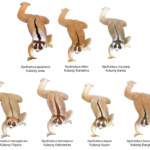
Kukang dengan genus Nycticebus merupakan bagian dari famili Lorisidae yang sebarannya berada di Asia Tenggara. Genus Nycticebus tersebar dari Burma, China, Kamboja, India, Thailand, Singapore, Vietnam, Malaysia dan juga Indonesia.

Read More »
Open chat
Hello,
How Can We Help You ?