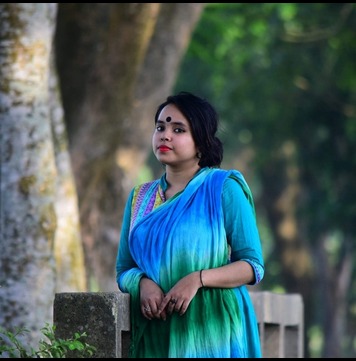
Marjan Maria is an accomplished wildlife biologist and conservationist from Bangladesh, deeply committed to protecting her country’s unique biodiversity and endangered species. As the co-founder of the Delta Biodiversity Research and Conservation Lab, Marjan spearheads research and conservation efforts focusing on primates, birds and other mammals.
Her ground-breaking work includes pioneering the use of artificial canopy bridges to reduce primate mortality and studying the behavioural ecology of the Bengal slow loris in fragmented forest habitats. Marjan’s research addresses critical conservation challenges, particularly in mitigating human-wildlife conflict with a special focus on primates. She is involved in various conservation education activities aimed at reducing this issue.
In addition to her leadership role at the lab, Marjan serves as the Animal Care and Research Coordinator for Plumploris e.V., a German conservation organization, where she monitors and rehabilitates rescued Bengal slow lorises. She is an active member of IUCN Primate Specialist Group Section on Human-Primate Interaction. Her contributions to wildlife conservation are widely recognized, with numerous publications and awards showcasing her innovative and impactful approach to safeguarding nature for future generations.
Researchgate link: https://www.researchgate.net/profile/Marjan-Maria-2
Linkedin Link: www.linkedin.com/in/marjan-maria-404460171
Email address: marjannature@gmail.com
I am deeply passionate about wildlife conservation, with a primary focus on the behavioral ecology of primates and the impacts of human activities on biodiversity. My research encompasses diverse aspects of primate ecology, including the Bengal slow loris, Phayre’s langur, and hoolock gibbon, with an emphasis on their behavior, habitat use, and conservation strategies. I am particularly interested in understanding the effects of road infrastructure on wildlife, investigating roadkill incidents, and developing mitigation measures, such as artificial canopy bridges, to reduce primate mortality.
In addition to primates, I have a strong interest in herpetofauna and other wildlife, exploring their ecological dynamics and threats posed by habitat loss, fragmentation, and climate change. Through my work with the Delta Biodiversity Research and Conservation Lab, I aim to integrate research, education, and community engagement to safeguard biodiversity in Bangladesh.
I aspire to address conservation challenges through interdisciplinary approaches, blending behavioral studies, spatial ecology, and innovative conservation strategies to ensure a sustainable coexistence between humans and wildlife.
Al-Razi, H., Hasan, S., Ahmed, T., Muzaffar, S. B. (2020) Home Range, Activity Budgets and Habitat Use in the Bengal Slow Loris (Nycticebus bengalensis) in Bangladesh. In Evolution, Ecology and Conservation of Lorises and Pottos (Cambridge Studies in Biological and Evolutionary Anthropology); Nekaris, K., Burrows, A., Eds.; Cambridge University Press, Cambridge, UK.
Nekaris, K.A.I., Al-Razi, H., Blair, M., Das, J., Ni, Q., Samun, E., Streicher, U., Xue-long, J. & Yongcheng, L. (2020) Nycticebus bengalensis. The IUCN Red List of Threatened Species 2020: e.T39758A17970536.